


Blackview BV100 AI Smart Glasses combine an 8MP camera, open-ear audio, and AI-powered features in lightweight eyewear. These smart glasses offer wearable POV photo and video capture, real-time translation, voice assistance, and Bluetooth calling at a budget-friendly price — over 60% cheaper than premium alternatives like Ray-Ban Meta.
We tested the BV100 extensively across various scenarios to evaluate camera quality, AI functionality, audio performance, and overall usability. This Blackview BV100 review reveals whether these smart glasses deliver real value or fall short of expectations.
The BV100 targets content creators seeking POV recording capabilities, travelers needing real-time translation, and everyday users who want hands-free calling and music playback without traditional earbuds. Additionally, the internal 32GB storage eliminates the need for constant smartphone connectivity during recording sessions.
Table of contents
Availability and Price
Blackview BV100 AI Smart Glasses are available now on the official Blackview store for $129.99, reduced from the original $181.99 price. To reduce the final purchase amount by $20, you can use the coupon code: SKFT12GZ7ZBY ($20 OFF) prepared by the Blackview Team. European customers can purchase the BV100 for €86.95 (down from €121.95) through Blackview’s EU store.
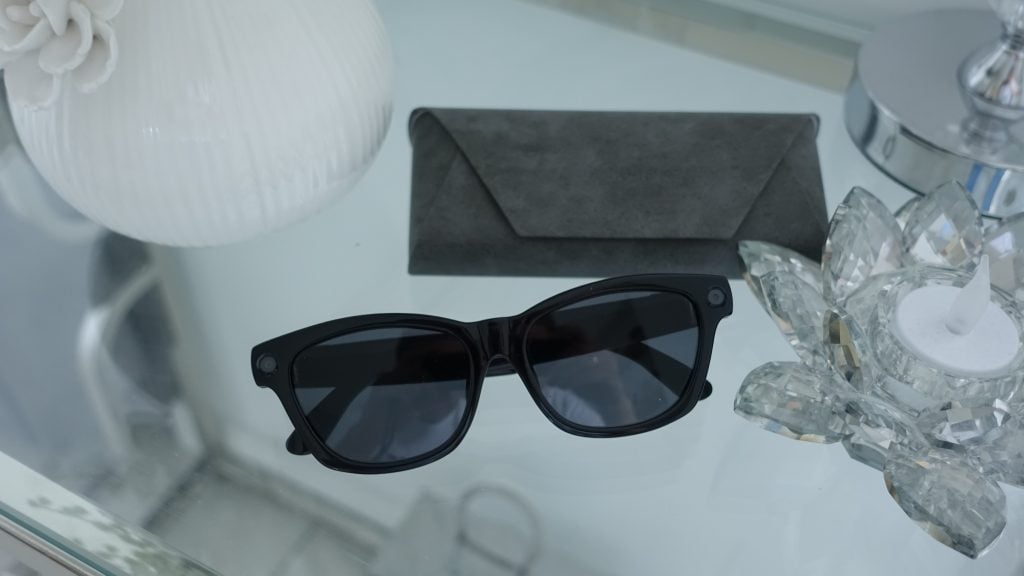
The glasses ship in two lens variants: clear lenses with anti-blue light coating for indoor use, and polarized sunglasses for outdoor environments. Both versions include the same 8MP camera, AI features, and audio hardware.
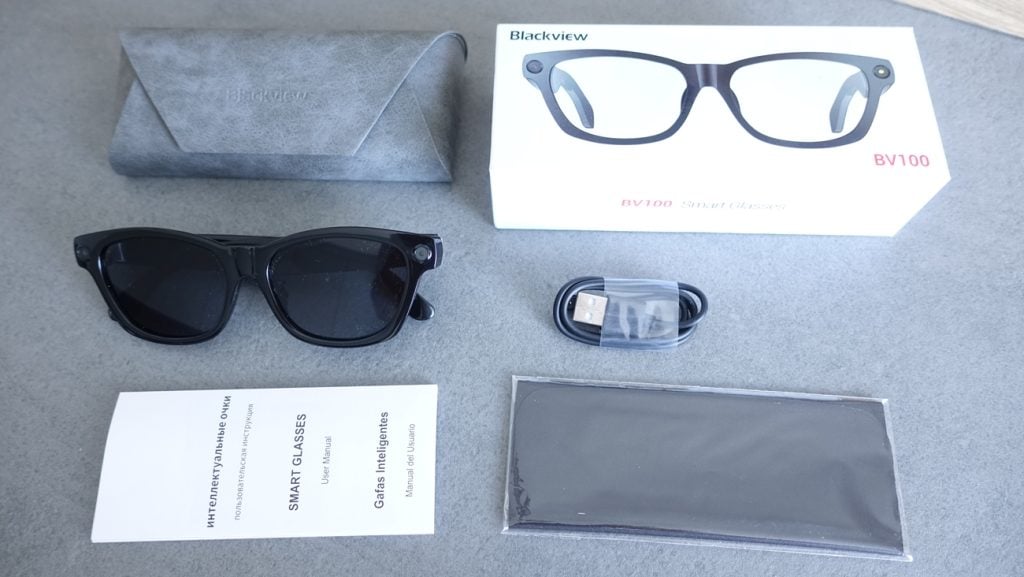
Shipping covers the continental USA with fast delivery, while international shipping reaches Europe and other regions through Blackview’s official channels. The package includes the glasses, magnetic charging cable, soft carrying case, cleaning cloth, and user manual.
Product Details
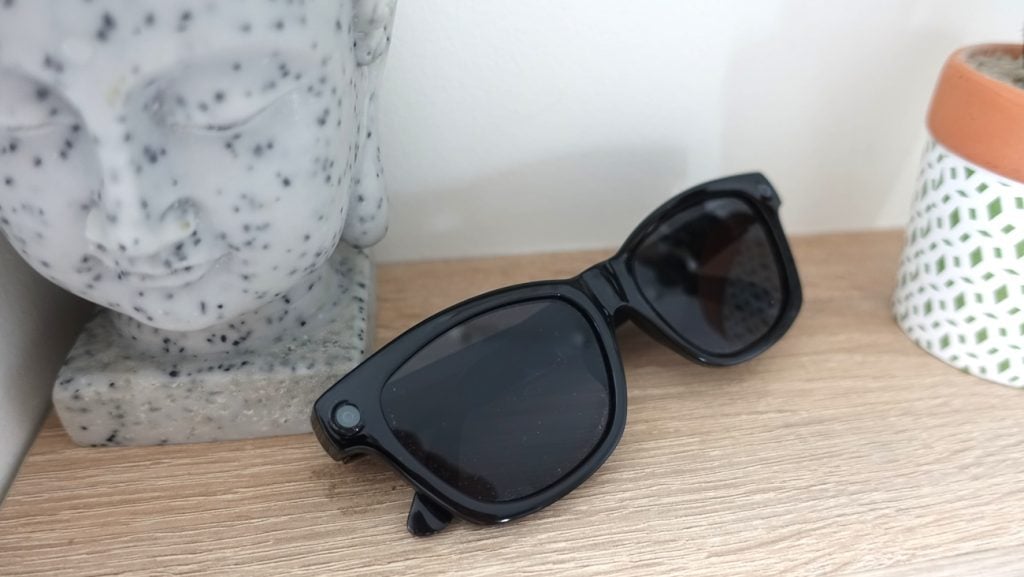
Blackview BV100 AI Smart Glasses Specification
Camera and Recording:
- Camera: 8MP (800W) CMOS sensor
- Photo Resolution: 8MP (3264×2448)
- Video Resolution: 1200P (1920×1080) @ 30fps
- Video Recording Length: 3 minutes default (adjustable up to 12 minutes per clip)
- Audio Recording: Up to 120 minutes continuous
- Image Features: AI stabilization, HDR synthesis, multi-frame noise reduction, automatic optimization
Processor and Storage:
- Chipset: JL7018F + Allwinner V821 dual-chip architecture
- Internal Storage: 32GB Flash
- Memory: 512KB SRAM + 64KB ROM
Audio:
- Speakers: Dual open-ear hi-fi stereo speakers
- Microphones: Dual mics with ENC (Environmental Noise Cancellation)
- Audio Functions: Bluetooth calls, music playback, voice assistant responses
Connectivity:
- Bluetooth: 5.4 with LE technology
- WiFi: Dual-mode (for file transfer)
- App: Hey Cyan (iOS and Android compatible)
Battery:
- Capacity: 220mAh
- Music Playback: Up to 5 hours
- Video Recording: Approximately 40 minutes
- Standby Time: Up to 10 days
- Charging Time: ~60 minutes
- Charging Method: Magnetic pogo pins (Type-C cable)
Physical Specifications:
- Weight: 45.7g
- Dimensions: 150×49×40mm
- Water Resistance: IP54 (dust and splash resistant)
- Lens Options: Anti-blue light clear / Polarized sunglasses
- Sensors: IR wear-detection (auto-on/off)
AI Features:
- Real-time translation (23+ languages)
- Object and text recognition
- Voice assistant (“Hey Cyan” wake command)
- Visual analysis and transcription
- AI image optimization
Package Contents:
- BV100 smart glasses
- Magnetic charging cable
- Soft carrying case
- Cleaning cloth
- User manual
First Impressions and Build Quality
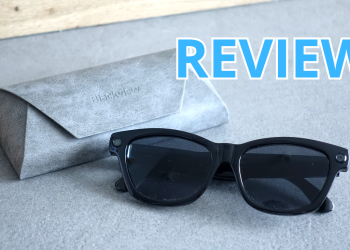
The BV100 arrives in a compact box with premium presentation. The soft carrying case provides excellent protection during travel, featuring magnetic closure and soft-touch interior lining that prevents lens scratches. The case itself feels substantial and well-constructed, matching the quality level of cases included with glasses costing significantly more.
When it comes to build quality, the BV100 immediately impresses with its lightweight construction. At 45.7 grams, these glasses weigh less than many prescription eyewear frames despite housing cameras, batteries, speakers, and processing hardware. The weight distribution feels balanced, with no noticeable heaviness on either temple.
The frame construction uses high-quality plastic with sturdy hinges that inspire confidence during daily use. Opening and closing the arms reveals smooth, controlled movement without looseness or wobbling. The hinges feature sufficient resistance to prevent accidental folding while wearing the glasses, yet remain easy enough to operate single-handed.
Furthermore, the temple arms integrate all electronic components seamlessly. The right arm houses the camera lens flush with the frame surface, making it nearly invisible unless viewed at close range under direct lighting. The left temple includes a small LED indicator that illuminates during video recording, providing visual feedback to nearby individuals.
The magnetic charging connectors sit on the inner right temple, using gold-plated pogo pins that align automatically when the magnetic cable approaches. This charging design eliminates fumbling with ports and ensures secure connection every time.
Additionally, the lens quality exceeds expectations for the price point. The anti-blue light coating on the clear lens variant reduces eye strain during extended wear, while the polarized sunglasses version effectively cuts glare from reflective surfaces. During testing, we noticed the lenses appear to darken slightly in direct sunlight, suggesting possible photochromic properties not mentioned in official specifications.
The nose pads provide comfortable support without creating pressure points during multi-hour wearing sessions. The overall comfort level matches traditional eyewear, allowing all-day use without the ear fatigue associated with conventional earbuds or headphones.


Camera Quality and Recording Performance
The 8MP camera delivers surprisingly good results considering the compact integration into eyewear frames. Photo quality stands out as the BV100’s strongest camera feature, producing clear, detailed images with accurate color reproduction in good lighting conditions.
During testing, the camera handled well. Photos showed good detail and usable dynamic range. AI image optimization automatically adjusted exposure and applied noise reduction, resulting in cleaner images than raw sensor output would produce.
Outdoor photography performed equally well in daylight conditions. The 8MP sensor captured sharp images with natural color saturation. The camera’s field of view provides a true point-of-view perspective, showing exactly what the wearer sees without the awkward angles that result from holding smartphones or action cameras.
Video recording quality meets acceptable standards for casual content creation and documentation purposes. The 1200P resolution (1920×1080 @ 30fps) produces clear footage suitable for social media uploads, video logs, and personal archives. However, video quality cannot match modern smartphone cameras or dedicated action cameras.
Daylight video recording showed the best results during our testing. The AI stabilization reduced shake compared to completely unstabilized footage, though it cannot eliminate all movement from walking or driving.
The microphones captured clear audio of ambient sounds and narration, making the footage suitable for documentation and travel videos.
The anti-shake algorithm provides noticeable improvement over completely unstabilized video. While it cannot match gimbal-stabilized footage or optical image stabilization from premium cameras, it reduces the distracting shake that would otherwise make walking footage difficult to watch.
One practical advantage of the glasses format became apparent during testing: the point-of-view perspective creates immersive content that shows exactly what the wearer experiences. This perspective proves particularly valuable for tutorial content, travel documentation, and first-person activity recording.
Audio Performance and Open-Ear Design
The dual open-ear stereo speakers deliver clear, balanced audio that exceeds expectations for speakers integrated into eyewear frames. Music playback, podcast listening, and audiobook narration all came through with excellent clarity and surprising volume capability.
Audio quality leans toward the treble-heavy side, as expected from small speaker drivers. Bass presence exists but lacks the depth and impact of traditional headphones or earbuds. The tonal balance favors vocal clarity and instrumental detail in the midrange and treble frequencies, making spoken content like podcasts and audiobooks particularly enjoyable.
Volume output reaches impressive levels for such small speakers. Testing at various outdoor locations confirmed the speakers maintain audibility even in moderately noisy environments. The maximum volume provides more than enough output for personal listening without disturbing nearby people.
The open-ear design represents one of the BV100’s most significant advantages over traditional audio solutions. Unlike earbuds that block external sound or headphones that isolate the listener, these glasses allow complete environmental awareness while playing audio. This design proves essential for safety during cycling, walking in traffic, or any situation where hearing surroundings matters.
Music played clearly while traffic sounds, approaching vehicles, and other environmental cues remained audible. The open design eliminated the dangerous isolation that occurs with noise-canceling earbuds.
Furthermore, the speakers caused no ear fatigue during extended wearing sessions. Traditional earbuds create pressure points inside ear canals and can cause discomfort after several hours of use. The BV100’s speakers simply project sound without touching ears, enabling all-day comfort.
Call quality impressed during testing across various environments. The dual microphones with Environmental Noise Cancellation effectively filtered background noise during calls, delivering clear voice transmission even in noisy locations. Test calls made from busy streets and moving vehicles resulted in clear communication on both ends of the conversation.
The microphones handled voice recording equally well. Audio recording tests captured clear narration with minimal background noise intrusion. The ENC technology distinguished voice from ambient sound, producing usable audio recordings for meetings, notes, and documentation purposes.
Music playback through the speakers works well for casual listening and background audio. The BV100 provides satisfying performance for most use cases, though audiophiles will prefer dedicated headphones for critical listening.
One limitation became apparent during very quiet indoor listening: audio from the open speakers remains audible to nearby people in silent environments. However, the moderate volume levels mean the glasses work fine in most public spaces without disturbing others.
The AI functionality distinguishes the BV100 from simple camera glasses, though implementation varies in consistency and reliability. The Hey Cyan app provides access to translation, object recognition, voice assistance, and file management features.
Real-time translation worked reliably during testing. Speaking in English and requesting translation to German or Spanish produced accurate results with minimal delay. The system supports 23+ languages covering major international travel destinations and business languages. For travelers encountering foreign language menus, signs, or conversations, this feature provides genuine practical value.
Object recognition demonstrated impressive accuracy when conditions aligned properly. Pointing the camera at common objects, landmarks, or products and requesting identification through voice command produced detailed descriptions. Testing with various items including electronic devices, food products, and decorative objects resulted in correct identification and relevant information most of the time.
Voice assistant functionality provided mixed results during extensive testing. Weather queries consistently returned accurate information with local forecasts and detailed conditions. Simple questions about facts, definitions, and general knowledge worked reliably.
However, the voice assistant exhibited inconsistent responsiveness that proved frustrating during practical use. Sometimes the wake command “Hey Cyan” triggered immediate response, while other occasions resulted in no acknowledgment despite clear voice input. Pressing the physical button to activate the assistant provided more reliable operation than voice wake-up.
AI Features and Hey Cyan App
Additionally, response delays varied unpredictably. Some queries received instant answers, while identical questions asked minutes later resulted in extended processing time or no response at all. These inconsistencies suggest the AI features depend heavily on stable connectivity and cloud processing.
The Hey Cyan app serves as the control center for all advanced features and file management. The interface provides clear access to settings, stored photos and videos, and feature configuration.
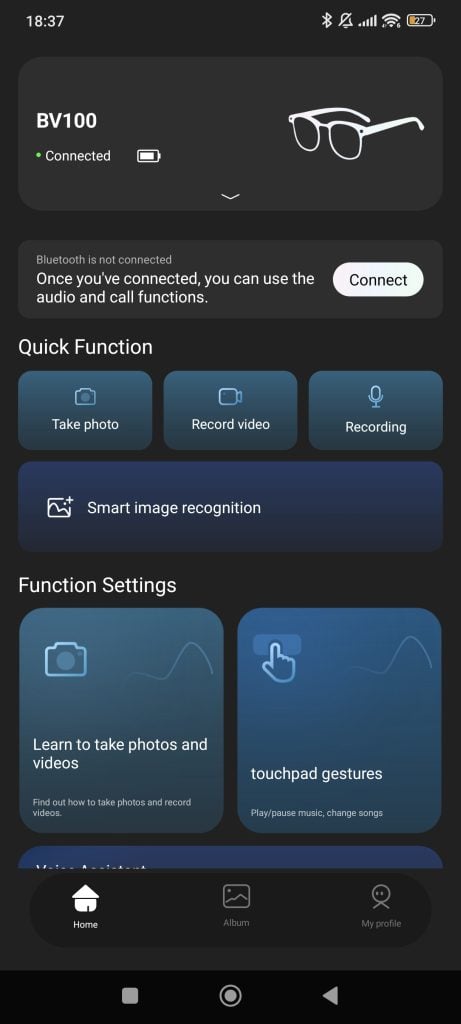
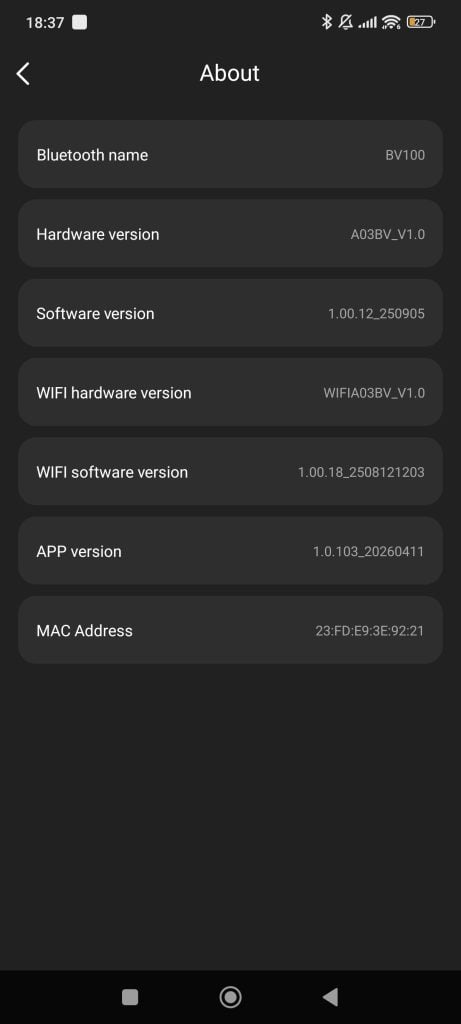
WiFi file transfer from the glasses to smartphone worked reliably during our testing. Transfers completed quickly and consistently, moving photos and videos from the glasses’ 32GB internal storage to the phone without errors. The wireless transfer proved more convenient than expected, though transfer speed depends on WiFi network quality. While file transfer functionality worked well, the app showed occasional performance issues. Browsing large photo galleries sometimes resulted in interface lag, and the app could benefit from optimization when handling extensive media libraries. These represent minor refinements rather than critical flaws.
Regarding the app’s dependency, the AI features appear to operate through cloud processing rather than onboard the glasses. This architecture explains the occasional AI assistant unresponsiveness and requires stable internet connectivity for full functionality. Users in areas with weak cellular coverage or limited WiFi access will experience reduced AI capability.
Despite these limitations, when the AI features work properly, they demonstrate genuine utility. The translation feature proves valuable for international travel, object recognition helps identify unfamiliar items, and voice queries provide hands-free information access.
Visual analysis worked well during testing. Taking a photo of complex scenes and requesting description produced detailed explanations of visible elements. Testing with interface photos resulted in accurate identification of icons, buttons, and interface elements.
Battery Life and Controls
The 220mAh battery delivered performance matching manufacturer specifications across our testing scenarios. Audio playback consistently reached the advertised 5-hour runtime during music listening sessions. Casual use with intermittent calls, occasional photos, and periodic voice queries extended the glasses through full workdays without charging.
Video recording drained the battery significantly faster, as expected. Continuous video capture lasted approximately 40 minutes before requiring recharge, matching the official specification. This limitation suits short recording sessions, event highlights, and brief documentation.
The magnetic charging system works flawlessly. The cable snaps into place automatically when brought near the temple connectors, creating secure contact without fumbling or precise alignment. Charging from empty to full completed in roughly 60 minutes.
Furthermore, standby time exceeded expectations during testing. The IR wear sensor automatically powers down the glasses when removed, conserving battery without manual shutdown.
The control scheme demonstrates thoughtful design that balances functionality with simplicity. Every operation can be completed using just three input methods: left physical button, right physical button, and right touch slider. This minimalist approach prevents the confusion that plagues devices with excessive button combinations.
Right Physical Button:
- Hold 2 seconds: Power on
- Hold 5 seconds: Power off
- Hold 10 seconds: Factory reset
- Press once: Take photo
- Press twice: Start/stop video recording
Left Physical Button:
- Press once: Activate voice assistant
- Press twice: Start/stop audio recording
- Press once (during call): Answer
- Hold 2 seconds (during call): Reject
Right Touch Slider:
- Touch once: Play/pause music
- Touch twice: Next track
- Slide forward: Volume up
- Slide backward: Volume down
Physical button feedback provides satisfying tactile confirmation without requiring excessive force. The buttons depress with clear activation points, making operation possible without looking.
Call handling worked smoothly during testing. Incoming calls triggered audio notification through the speakers, and answering via either physical button connected the call immediately. Voice clarity impressed both directions.
Video Sample
Photo samples


See also: Blackview AirBuds 8 Review: Budget TWS earbuds with ANC
Blackview BV100 Review: Conclusions
The Blackview BV100 smart glasses succeed in delivering practical AI-powered eyewear at a price point that makes the technology accessible to budget-conscious buyers. For users seeking POV content creation, real-time translation capability, and open-ear audio without spending $300+ on premium alternatives, the BV100 provides genuine value despite some limitations.
Camera quality stands out as surprisingly good for integrated eyewear, particularly for still photography. The 8MP sensor produces usable images suitable for social media sharing and personal documentation. Video quality meets acceptable standards for casual content creation, though it cannot replace dedicated cameras or modern smartphones for professional work.
The open-ear audio design represents a significant advantage over traditional earbuds for safety-conscious users. Cyclists, runners, and urban commuters benefit from environmental awareness while enjoying music, podcasts, or audiobooks. Call quality exceeded expectations, making the glasses viable for hands-free communication during commutes or activities.
AI features demonstrate useful capabilities when they work reliably. Real-time translation provides practical value for travelers, object recognition satisfies curiosity about unfamiliar items, and voice assistance offers hands-free information access. However, inconsistent AI assistant responsiveness occasionally diminishes the overall utility of these features.
The Hey Cyan app handled file management adequately during testing. WiFi transfer worked reliably, though the app interface could benefit from performance optimization when handling large media libraries. These represent minor refinements rather than critical issues.
Battery life meets expectations for typical use cases. Five hours of audio playback supports full workdays, while 40 minutes of video recording suits short sessions and event highlights. Users planning extended video projects should prepare for frequent recharging or plan shorter clips.
Build quality and comfort impress throughout extended testing.
The lightweight design, sturdy construction, and comfortable fit enable all-day wear without discomfort. The glasses look reasonably conventional rather than obviously technological, allowing discreet use in public without self-consciousness.
Considering the $130 price point ($60 in Europe), the BV100 delivers remarkable value. Premium smart glasses like Ray-Ban Meta cost over $300, making the BV100’s similar feature set at one-third the price compelling for budget buyers. While the Meta offers better integration, longer battery life, and more polished software, the BV100 provides the core functionality at accessible pricing. If you are looking for affordable smart glasses for POV content creation, travel documentation, or hands-free audio and calling, the Blackview BV100 deserves serious consideration. The camera quality, open-ear design, and AI features provide practical benefits despite minor app optimization needs.
Additionally, the internal 32GB storage eliminates smartphone dependency during recording sessions.
Users requiring professional video quality, rock-solid reliability, or extensive battery life for long recording sessions should consider premium alternatives or dedicated cameras. However, casual content creators, travelers, and everyday users wanting smart eyewear features without premium pricing will find the BV100 offers impressive capability for the cost.
The glasses excel for specific use cases: shopping haul videos, travel documentation, cycling with audio, hands-free calls during commutes, and quick POV captures without pulling out smartphones. For these applications, the BV100 provides genuine utility that justifies the purchase.
Overall, the Blackview BV100 represents an accessible entry point into AI-powered smart glasses. While app improvements would enhance the user experience significantly, the hardware quality, camera performance, and audio capability deliver practical value at a price point that makes smart eyewear accessible to mainstream buyers rather than only early adopters with large budgets.
Blackview BV100
USD129.99
Pros
- Excellent value for money
- Good photo quality for the price
- Real-time translation works well
- Lightweight and comfortable (45.7g)
- Wearable POV camera
Cons
- I voice assistant sometimes unresponsive
- App interface could be more responsive










Discussion about this post